
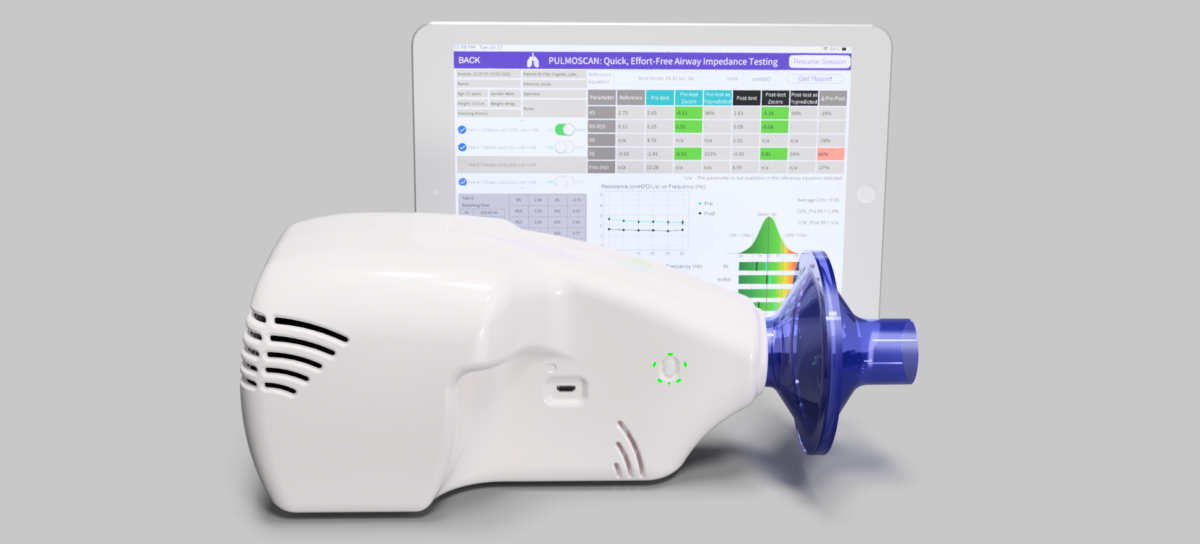
Oscillometry is a lung function test that measures how air moves through the airways during normal, quiet breathing, providing insights into obstruction and the mechanical properties of the airways.
Instead of asking patients to inhale deeply or blow forcefully, oscillometry introduces mild pressure waves into the airway while the patient breathes normally. The device analyzes the resulting changes in pressure and flow due to inherent airway resistance and reactance, that is, the overall mechanical behavior of the respiratory system.
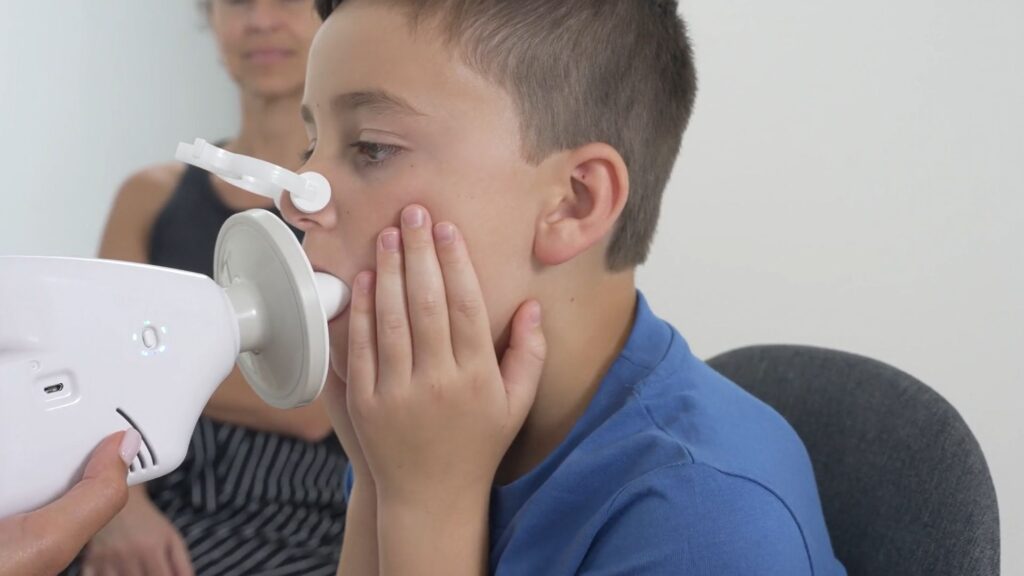
The technique is often referred to as the Forced Oscillation Technique, or FOT. The word “forced” refers to the applied oscillating signal, not to patient effort. From the patient’s perspective, the test is completely passive.
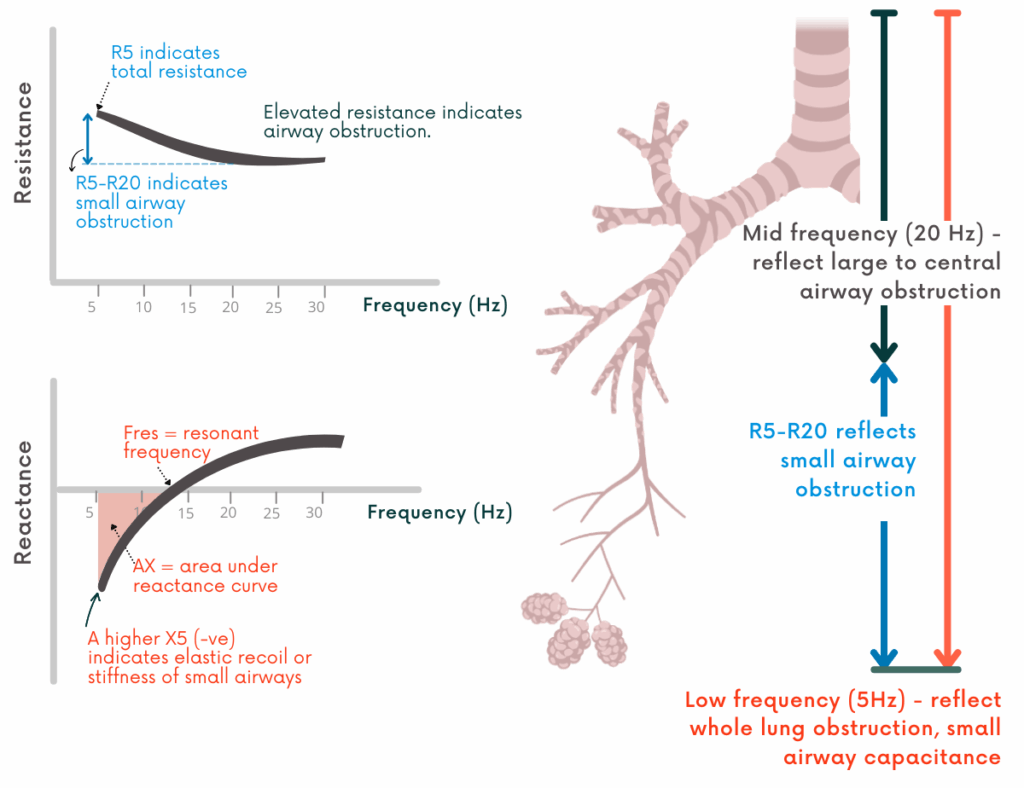
Oscillometry measures resistance, which reflects how easily air flows through the airways. It also measures reactance, which reflects the elastic properties of lung tissue and airways.
Together, these parameters offer a window into the small and central airways with signatures specific for restrictive and obstructive diseases. Clinicians gain an immediate view of the region of the lungs where early disease often begins, and where symptoms may not yet appear in traditional lung test results. Learn more about data interpretation.

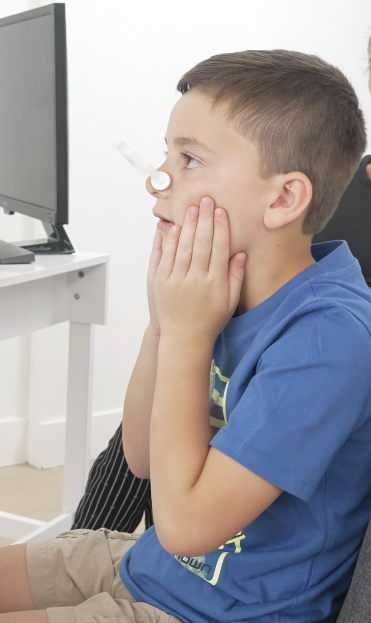

Ideal for patients who cannot produce reliable forced exhalations. Children, older adults, patients with neuromuscular disease, and patients with advanced respiratory disease.
Because oscillometry does not depend on forced maneuvers, it reduces variability caused by effort. This makes it especially useful for longitudinal tracking and for patient populations that struggle with spirometry. For vulnerable populations, oscillometry is not simply an alternative. It is often the only reliable pulmonary function testing option.
Oscillometry is already used across a range of clinical settings, including pediatric, primary care, and pulmonary practices, both internationally and within the United States. It is frequently used to support airway disease diagnosis and monitoring, particularly when spirometry is normal, inconclusive, or difficult for patients to perform.
Oscillometry is gaining popularity in pediatrics, where patient cooperation limits traditional testing. It is widely used in research to quantify airway behavior with high sensitivity, and in pharmaceutical development to evaluate treatment response, disease progression, and drug performance in both clinical trials and real-world settings. Oscillometry is also a natural fit for ER settings, where quick tests on compromised patients are beneficial.